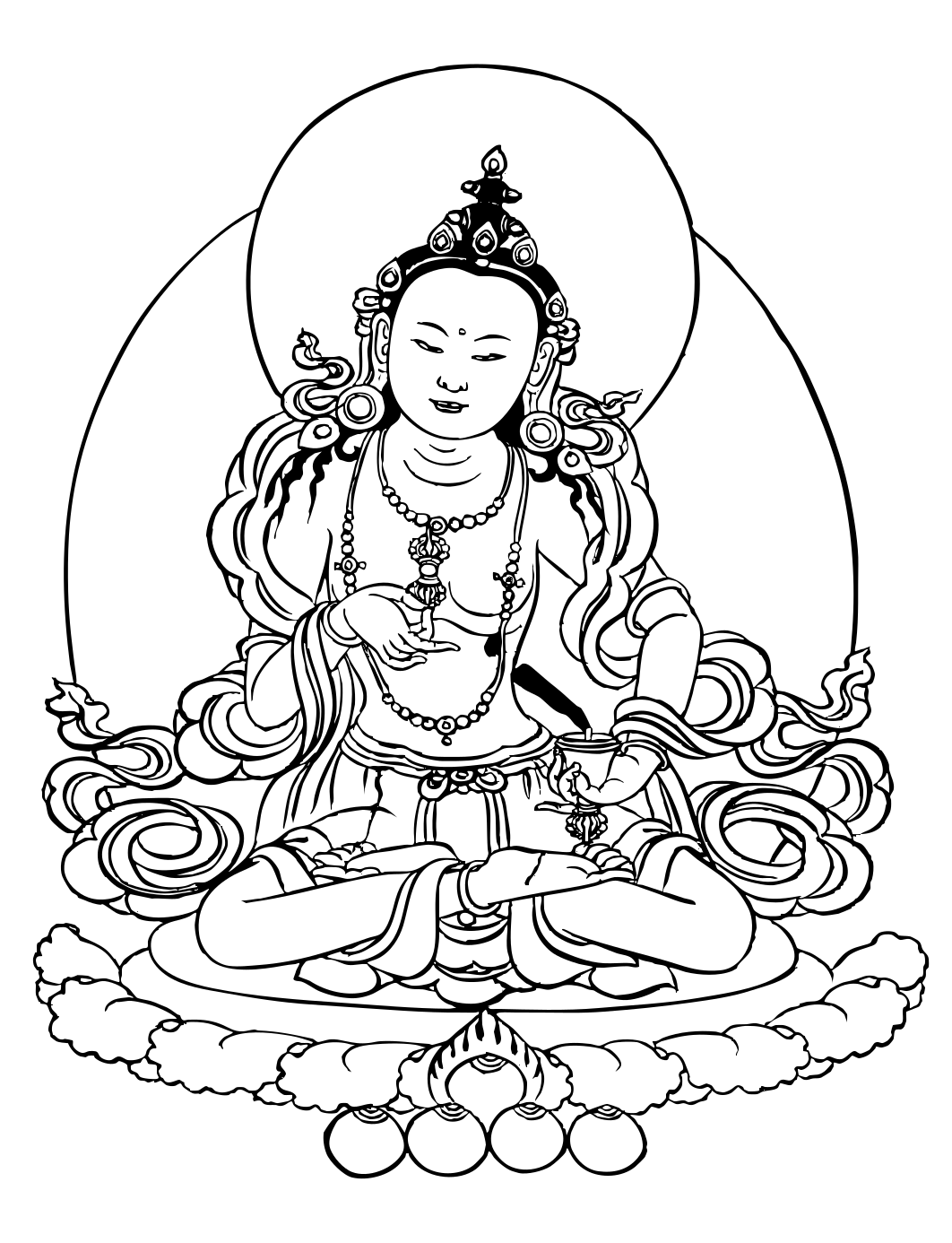
General Sūtra Section
Calling Witness with a Hundred Prostrations
Toh 267
Imprint
Summary
Acknowledgments
Introduction
The Translation
Colophon
Notes
Glossary
Bibliography
Abbreviations
n.

Notes

n.1

See Richardson (2003), p. 159 and Haarh (1969), pp. 126–27.

i.1
n.2

See Roberts (2013).

i.2
n.3

Obermiller very loosely translated dpang skong phyag brgya pa as 100 Precepts concerning Worship. We have translated it Calling Witness With a Hundred Prostrations.

i.2
n.4

Obermiller (1999), p. 182. The transliteration and punctuation are those of Obermiller.

i.2
n.5

Mangthö Ludrup Gyatso (2008), p. 385.

i.4
n.6

Here translated as Calling Witness With a Hundred Prostrations.

i.6
n.7

See Dharmachakra Translation Committee, trans., The Jewel Cloud, Toh 231 (84000: Translating the Words of the Buddha, 2019).

i.6
n.8

Obermiller (1999), p. 183–84.

i.6
n.9

Ui (1934), p. 52.

i.8
n.10

Since the first publication of this translation, an article by Sam van Schaik (van Schaik 2018) has further investigated possible interpretations of the title.

i.11
n.11

We have also made use of Lokesh Chandra (1987) and (1976).

i.12
n.12

H and N have the additional, opening homage, dkon mchog gsum la phyag ’tshal lo (“prostrations to the Triple Gem”), before the title.

1.1
n.13

One of the thirty-five buddhas of confession. See Python (1973), p. 99, and Lokesh Chandra (1987), #2300–2334.

1.6
n.14

D bsung (“fragrance”); H and N add tog gi (“crown ornament”).

1.8
n.15

D zla ’od; J and C pad mo dpal gyi (“Glorious Lotus”).

1.11
n.16

The Tibetan reads ma lus pa’i dbang po (“Lord of All”), which is not the usual rendition of Viśvabhū, i.e., kun skyobs. However, the context clearly indicates that the sūtra is presenting the traditional list of the six tathāgatas who preceded Śākyamuni, from Vipaśyin to Kāśyapa. In that list Viśvabhū follows Śikhin.

1.14
n.17

D dpal; Ky dpa’ ba’i dpal (“brave glory”); J, K, and C dpa’ (“courageous”).

1.15
n.18

rnam par snang mdzad; also the name of the Buddha Vairocana.

1.15
n.19

The “category of sūtras” (mdo’i sde) is the first of the twelve branches of scripture (gsung rab kyi yan lag bcu gnyis), which are enumerated here.

1.17
n.20

The Tibetan reads ’das pa brjod pa’i sde. Mahāvyutpatti 1274, however, gives de lta bu byung ba’i sde for the category itivṛttaka (“parables,” “stories”), and this seems to be the more usual equivalence.

1.18
n.21

D, S, and N bsal; J, K, and C bslad (“express”).

1.32
n.22

The Tibetan byang chub kyi snying po (literally “essence of enlightenment”) generally renders the Sanskrit bodhi­maṇḍa (“seat of enlightenment”) in these types of expressions. “Essence” has been chosen for reasons of readability.

1.33
n.23

Ky, J, K, and C add yod pa (“possession of”).

1.35
n.24

D khams; Ky, J, N, and C dngos po dang sems (“matter and mind”).

1.35
n.25

These three classifications of elements (dharma) are, following the Abhidharma, ways to describe the impersonal constituents that go to make up a person. The five aggregates collect all conditioned elements, while the eighteen domains are comprised of the six types of objects, the six corresponding faculties‍—five sensory and one mental‍—and the six consciousnesses. The twelve bases are the six objects and the six corresponding faculties that serve as sources of cognition.

1.35

Glossary

aggregate
  • phung po
  • ཕུང་པོ།
  • skandha
,
Ākāśagarbha
  • nam mkha’i snying po
  • ནམ་མཁའི་སྙིང་པོ།
  • ākāśagarbha

A bodhisattva.

Akṣobhya
  • mi bskyod pa
  • མི་བསྐྱོད་པ།
  • akṣobhya

Lit. “Not Disturbed” or “Immovable One.” The buddha in the eastern realm of Abhirati. A well-known buddha in Mahāyāna, regarded in the higher tantras as the head of one of the five buddha families, the vajra family in the east.

,
Amitābha
  • ’od dpag med
  • འོད་དཔག་མེད།
  • amitābha

The buddha of the western buddhafield of Sukhāvatī, where fortunate beings are reborn to make further progress toward spiritual maturity. Amitābha made his great vows to create such a realm when he was a bodhisattva called Dharmākara. In the Pure Land Buddhist tradition, popular in East Asia, aspiring to be reborn in his buddha realm is the main emphasis; in other Mahāyāna traditions, too, it is a widespread practice. For a detailed description of the realm, see The Display of the Pure Land of Sukhāvatī, Toh 115. In some tantras that make reference to the five families he is the tathāgata associated with the lotus family.

Amitābha, “Infinite Light,” is also known in many Indian Buddhist works as Amitāyus, “Infinite Life.” In both East Asian and Tibetan Buddhist traditions he is often conflated with another buddha named “Infinite Life,” Aparimitāyus, or “Infinite Life and Wisdom,”Aparimitāyurjñāna, the shorter version of whose name has also been back-translated from Tibetan into Sanskrit as Amitāyus but who presides over a realm in the zenith. For details on the relation between these buddhas and their names, see The Aparimitāyurjñāna Sūtra (1) Toh 674, i.9.

Amitāyus
  • tshe dpag med
  • ཚེ་དཔག་མེད།
  • amitāyus

The name of a buddha.

Amoghasiddhi
  • don yod grub pa
  • དོན་ཡོད་གྲུབ་པ།
  • amoghasiddhi

A buddha of the north.

Ānandaśrī
  • dga’ ba’i dpal
  • དགའ་བའི་དཔལ།
  • ānandaśrī

A buddha of the zenith.

Aśokadatta
  • mya ngan med pas byin
  • མྱ་ངན་མེད་པས་བྱིན།
  • aśokadatta

A bodhisattva of the south.

Aśokaśrī
  • mya ngan med pa
  • མྱ་ངན་མེད་པ།
  • aśokaśrī

A buddha of the south.

Avalokiteśvara
  • spyan ras gzigs
  • སྤྱན་རས་གཟིགས།
  • avalokiteśvara

One of the “eight close sons of the Buddha,” he is also known as the bodhisattva who embodies compassion. In certain tantras, he is also the lord of the three families, where he embodies the compassion of the buddhas. In Tibet, he attained great significance as a special protector of Tibet, and in China, in female form, as Guanyin, the most important bodhisattva in all of East Asia.

bases of cognition
  • skye mched
  • སྐྱེ་མཆེད།
  • āyatana

These can be listed as twelve or as six sense sources (sometimes also called sense fields, bases of cognition, or simply āyatanas).

In the context of epistemology, it is one way of describing experience and the world in terms of twelve sense sources, which can be divided into inner and outer sense sources, namely: (1–2) eye and form, (3–4) ear and sound, (5–6) nose and odor, (7–8) tongue and taste, (9–10) body and touch, (11–12) mind and mental phenomena.

In the context of the twelve links of dependent origination, only six sense sources are mentioned, and they are the inner sense sources (identical to the six faculties) of eye, ear, nose, tongue, body, and mind.

bhagavān
  • bcom ldan ’das
  • བཅོམ་ལྡན་འདས།
  • bhagavān

In Buddhist literature, this is an epithet applied to buddhas, most often to Śākyamuni. The Sanskrit term generally means “possessing fortune,” but in specifically Buddhist contexts it implies that a buddha is in possession of six auspicious qualities (bhaga) associated with complete awakening. The Tibetan term‍—where bcom is said to refer to “subduing” the four māras, ldan to “possessing” the great qualities of buddhahood, and ’das to “going beyond” saṃsāra and nirvāṇa‍—possibly reflects the commentarial tradition where the Sanskrit bhagavat is interpreted, in addition, as “one who destroys the four māras.” This is achieved either by reading bhagavat as bhagnavat (“one who broke”), or by tracing the word bhaga to the root √bhañj (“to break”).

Bhaiṣajya­guru­vaiḍūrya­prabha­rāja
  • sman gyi bla bai du rya’i ’od kyi rgyal po
  • སྨན་གྱི་བླ་བཻ་དུ་རྱའི་འོད་ཀྱི་རྒྱལ་པོ།
  • bhaiṣajya­guru­vaiḍūrya­prabha­rāja

The buddha of medicine.

Candraprabha
  • zla ’od
  • ཟླ་འོད།
  • candraprabha

A buddha.

Chattrottama­śrī
  • gdugs dam pa’i dpal
  • གདུགས་དམ་པའི་དཔལ།
  • chattrottama­śrī

A buddha of the northwest.

domain
  • khams
  • ཁམས།
  • dhātu

In the context of Buddhist philosophy, one way to describe experience in terms of eighteen elements (eye, form, and eye consciousness; ear, sound, and ear consciousness; nose, smell, and nose consciousness; tongue, taste, and tongue consciousness; body, touch, and body consciousness; and mind, mental phenomena, and mind consciousness).

This also refers to the elements of the world, which can be enumerated as four, five, or six. The four elements are earth, water, fire, and air. A fifth, space, is often added, and the sixth is consciousness.

,
Exalted Jewel
  • rin chen mchog
  • རིན་ཆེན་མཆོག

Bodhisattva of the northwest.

extensive scriptures
  • shin tu rgyas pa’i sde
  • ཤིན་ཏུ་རྒྱས་པའི་སྡེ།
  • vaipulya

One of the twelve branches of scripture or aspects of the Dharma. Literally meaning “vast” or “extensive,” it refers to a particular set of lengthy sūtras or collections of sūtras that provides a comprehensive overview of Buddhist thought and practice. This category includes individual works such as the Lalitavistara and Saddharma­puṇḍarīka and collections such as the Mahā­sannipāta, Buddhāvataṃsaka, Ratnakūta, and Prajñāpāramitā.

finalized instructions
  • chos rtogs pa bstan pa’i sde
  • ཆོས་རྟོགས་པ་བསྟན་པའི་སྡེ།
  • upadeśa
Given by Joy
  • dga’ bas byin
  • དགའ་བས་བྱིན།

Bodhisattva of the zenith.

Golden Pillar
  • gser gyi gzu ba
  • གསེར་གྱི་གཟུ་བ།

A buddha.

Greatly Handsome
  • mdzes chen
  • མཛེས་ཆེན།

A buddha.

illustrative accounts
  • rtogs pa brjod pa’i sde
  • རྟོགས་པ་བརྗོད་པའི་སྡེ།
  • avadāna

One of the twelve types of the Buddha’s teaching (dvādaśāṅga). In this sense, the Sanskrit word avadāna means “exceptional feat” or “magnificent deed,” but in the context of the twelve types of buddhavacana the term came to refer to the narrative accounts of such deeds.

Intelligence in Conduct
  • spyod pa’i blo gros
  • སྤྱོད་པའི་བློ་གྲོས།

Bodhisattva of the west.

Jayadatta
  • rgyal bas byin
  • རྒྱལ་བས་བྱིན།
  • jayadatta

A bodhisattva of the north.

Jinendra
  • rgyal ba’i dbang po
  • རྒྱལ་བའི་དབང་པོ།
  • jinendra

A buddha of the north.

Joyful Eyes
  • dga’ ba’i spyan
  • དགའ་བའི་སྤྱན།

A buddha.

Kanakamuni
  • gser thub
  • གསེར་ཐུབ།
  • kanakamuni

The fifth of the “seven previous buddhas.”

Kāśyapa
  • ’od srung
  • འོད་སྲུང་།
  • kāśyapa

The sixth of the “seven previous buddhas.”

, ,
King of Renowned Melodious Sounds
  • grags pa’i sgra dbyangs kyi rgyal po
  • གྲགས་པའི་སྒྲ་དབྱངས་ཀྱི་རྒྱལ་པོ།

A buddha.

King Who Is Extremely Exalted by the Precious Majesty Arising from All Aspirations
  • smon lam thams cad las ’byung ba’i rin po che’i gzi brjid shin tu ’phags pa’i rgyal po
  • སྨོན་ལམ་ཐམས་ཅད་ལས་འབྱུང་བའི་རིན་པོ་ཆེའི་གཟི་བརྗིད་ཤིན་ཏུ་འཕགས་པའི་རྒྱལ་པོ།

A buddha.

King Who Is Lord of the World’s Orb
  • ’jig rten gyi dkyil ’khor dbang po’i rgyal po
  • འཇིག་རྟེན་གྱི་དཀྱིལ་འཁོར་དབང་པོའི་རྒྱལ་པོ།

A buddha.

King who is the Light of Intelligence that Understands All
  • thams cad mkhyen pa’i blo gros ’od zer gyi rgyal po
  • ཐམས་ཅད་མཁྱེན་པའི་བློ་གྲོས་འོད་ཟེར་གྱི་རྒྱལ་པོ།

A buddha.

King Whose Fragrance Is That of a Blossoming Utpala
  • ut pa la rgyas pa bsung gi rgyal po
  • ཨུཏ་པ་ལ་རྒྱས་པ་བསུང་གི་རྒྱལ་པོ།

A buddha.

Krakucchanda
  • log par dad sel
  • ལོག་པར་དད་སེལ།
  • krakucchanda

The fourth of the “seven previous buddhas.”

Kṣitigarbha
  • sa’i snying po
  • སའི་སྙིང་པོ།
  • kṣitigarbha

A bodhisattva.

Light of Infinite Good Qualities
  • mtha’ yas pa’i yon tan gyi ’od zer
  • མཐའ་ཡས་པའི་ཡོན་ཏན་གྱི་འོད་ཟེར།

A buddha.

Lord of the Ocean That Is the Wisdom Vajra
  • ye shes rdo rje’i rgya mtsho
  • ཡེ་ཤེས་རྡོ་རྗེའི་རྒྱ་མཚོ།

A buddha.

Mahā­sthāma­prāpta
  • mthu chen thob pa
  • མཐུ་ཆེན་ཐོབ་པ།
  • mahā­sthāma­prāpta

A bodhisattva.

Maitreya
  • byams pa
  • བྱམས་པ།
  • maitreya

The bodhisattva Maitreya is an important figure in many Buddhist traditions, where he is unanimously regarded as the buddha of the future era. He is said to currently reside in the heaven of Tuṣita, as Śākyamuni’s regent, where he awaits the proper time to take his final rebirth and become the fifth buddha in the Fortunate Eon, reestablishing the Dharma in this world after the teachings of the current buddha have disappeared. Within the Mahāyāna sūtras, Maitreya is elevated to the same status as other central bodhisattvas such as Mañjuśrī and Avalokiteśvara, and his name appears frequently in sūtras, either as the Buddha’s interlocutor or as a teacher of the Dharma. Maitreya literally means “Loving One.” He is also known as Ajita, meaning “Invincible.”

For more information on Maitreya, see, for example, the introduction to Maitreya’s Setting Out (Toh 198).

Mañjuśrī
  • ’jam dpal
  • འཇམ་དཔལ།
  • mañjuśrī

Mañjuśrī is one of the “eight close sons of the Buddha” and a bodhisattva who embodies wisdom. He is a major figure in the Mahāyāna sūtras, appearing often as an interlocutor of the Buddha. In his most well-known iconographic form, he is portrayed bearing the sword of wisdom in his right hand and a volume of the Prajñā­pāramitā­sūtra in his left. To his name, Mañjuśrī, meaning “Gentle and Glorious One,” is often added the epithet Kumārabhūta, “having a youthful form.” He is also called Mañjughoṣa, Mañjusvara, and Pañcaśikha.

marvelous teachings
  • rmad du byung ba’i sde
  • རྨད་དུ་བྱུང་བའི་སྡེ།
  • adbhutadharma
melodic verses
  • dbyangs kyis bsnyad pa’i sde
  • དབྱངས་ཀྱིས་བསྙད་པའི་སྡེ།
  • geya
metered verses
  • tshigs su bcad pa’i sde
  • ཚིགས་སུ་བཅད་པའི་སྡེ།
  • gāthā
Padmapāṇi
  • lag na pad mo
  • ལག་ན་པད་མོ།
  • padmapāṇi

A bodhisattva of the southeast.

Padmaśrī
  • pad mo’i dpal
  • པད་མོའི་དཔལ།
  • padmaśrī

A buddha of the nadir.

Padmottara
  • pad mo dam pa
  • པད་མོ་དམ་པ།
  • padmottara

A bodhisattva of the nadir.

Padmottaraśrī
  • pad mo dam pa’i dpal
  • པད་མོ་དམ་པའི་དཔལ།
  • padmottaraśrī

A buddha of the southeast.

parables
  • de lta bu byung ba’i sde, ’das pa brjod pa’i sde
  • དེ་ལྟ་བུ་བྱུང་བའི་སྡེ།, འདས་པ་བརྗོད་པའི་སྡེ།
  • itivŗttaka
,
past life accounts
  • skyes pa rabs kyi sde
  • སྐྱེས་པ་རབས་ཀྱི་སྡེ།
  • jātaka

Bibliography

Bibliography

dpang skong phyag brgya pa. Toh 267, Degé Kangyur vol. 68 (mdo sde, ya), folios 1.b–5.b.

dpang skong phyag brgya pa. bka’ ’gyur (dpe bsdur ma) [Comparative Edition of the Kangyur], krung go’i bod rig pa zhib ’jug ste gnas kyi bka’ bstan dpe sdur khang (The Tibetan Tripitaka Collation Bureau of the China Tibetology Research Center). 108 volumes. Beijing: krung go’i bod rig pa dpe skrun khang (China Tibetology Publishing House), 2006-9, vol. 68, pp. 23–31.

Chandra, Lokesh. Tibetan-Sanskrit Dictionary. New Delhi, 1971. Reprinted Kyoto: Rinsen Books, 1976.

Chandra, Lokesh. Buddhist Iconography. New Delhi: Aditya Prakashan, 1987.

Dharmachakra Translation Committee, trans. The Jewel Cloud (Ratnamegha, Toh 231). 84000: Translating the Words of the Buddha, 2019.

Haarh, Erik. The Yar-Lun Dynasty. Copenhagen: G.E.C. Gad’s Forlag, 1969.

Mangthö Ludrup Gyatso (mang thos klu sgrub rgya mtsho). “Chronology (bstan rtsis gsal ba’i nyin byed lhag bsam rab dkar), Book 5.” In sa skya’i dpe rnying bsdu sgrig u lhan nas bsgrigs, published in Sa skya’i chos ’byung gces bsdus. Beijing: krung go’i bod rig pa dpe skrun khang (China Tibetology Publishing House), 2008.

Negi, J. S. Tibetan Sanskrit Dictionary. Sarnath India: Dictionary Unit, Central Institute of Higher Tibetan Studies, 1993.

Obermiller, Eugene. History of Buddhism in India and Tibet (Chos-hbyung) by Bu-ston translated from Tibetan by E. Obermiller. Materialien zur Kunde des Buddhismus 13. Heidelberg: Institut für Buddhismus-Kunde, 1931. Reprinted Delhi: Sri Satguru Publications, 1999.

Python, Pierre, trans. Vinaya-viniścaya-upāli-paripṛcchā: Enquête d’Upāli pour un exégèse de la discipline. Paris: Adrien-Maisonneuve, 1973.

Richardson, Hugh. “The Origin of the Tibetan Kingdom.” Bulletin of Tibetology, 3, 1989: 5–19. Reprinted in Alex McKay, ed., The History of Tibet. The Early Period: to c. A.D. 850. The Yarlung Dynasty. London: Curzon Press, 2003.

Roberts, Peter Alan et al, trans. The Basket’s Display (Kāraṇḍa­vyūha, Toh 116). 84000: Translating the Words of the Buddha, 2013.

van Schaik, Sam. “Dharma from the Sky: The Pangkong Prayer.” Central Asiatic Journal vol. 61, no. 1 (Old Tibet and its Neighbours), 2018: 61–69. https://doi.org/10.13173/centasiaj.61.1.0061

Ui, Hakuju et al. A Complete Catalogue of the Tibetan Buddhist Canons (Bkaḥ-ḥgyur and Bstan-ḥgyur), edited by Hakuju Ui, Munetada Suzuki, Yenshō Kanakura, and Tōkan Tada. Sendai: Tōhoku Imperial University, 1934.

ab.

Abbreviations

C Choné Kangyur

D Degé Kangyur

H Lhasa Kangyur

J Lithang Kangyur

K Kangxi Peking Kangyur

Ky Yongle Peking Kangyur

N Narthang Kangyur

༄༅།  །དཔང་སྐོང་ཕྱག་བརྒྱ་པ།
Calling Witness with a Hundred Prostrations
vajrasattva
s.

Summary

s.1

Calling Witness with a Hundred Prostrations is widely known as the first sūtra to arrive in Tibet, long before Tibet became a Buddhist nation, during the reign of the Tibetan king Lha Thothori Nyentsen. Written to be recited for personal practice, it opens with one hundred and eight prostrations and praises to the many buddhas of the ten directions and three times, to the twelve categories of scripture contained in the Tripiṭaka, to the bodhisattvas of the ten directions, and to the arhat disciples of the Buddha. After making offerings to them, confessing and purifying nonvirtue, and making the aspiration to perform virtuous actions in every life, the text includes recitations of the vows of refuge in the Three Jewels, and of generating the thought of enlightenment. The text concludes with a passage rejoicing in the virtues of the holy ones, a request for the buddhas to bestow a prophecy to achieve enlightenment, and the aspiration to pass from this life in a state of pure Dharma.

ac.

Acknowledgments

ac.1

Translated from Tibetan into English by The Sakya Pandita Translation Group, Tsechen Kunchab Ling Division, by Venerable Khenpo Kalsang Gyaltsen and Reverend Dr. Chodrung-ma Kunga Chodron in 2010.

This translation has been completed under the patronage and supervision of 84000: Translating the Words of the Buddha.

i.

Introduction

i.1

Calling Witness with a Hundred Prostrations is widely known and revered as one of the first Buddhist texts to come to Tibet, arriving during the third century according to the dating by traditional Tibetan historians, or during the fifth century, according to Western scholars such as Hugh Richardson and Erik Haarh. In any case, this was long before the people of Tibet became Buddhist or had a written language. This history is substantiated by the text’s own colophon, as well as Butön’s seminal History of Buddhism in India and Tibet. As Butön (bu ston) relates, in Obermiller’s translation:

i.2

As the 26th of this line [beginning with the first Tibetan King Ña-thi-tsen-po], there appeared the King Tho-tho-ri-ñan-tsen. When the latter attained the age of 16 years and was abiding on the summit of the palace Yam-bu-la-gaṅ, a casket fell from the skies, and when its lid was opened, the Kāraṇḍa­vyūha Sūtra, the 100 Precepts Concerning Worship and a golden Caitya were found within. The casket received the name of the “Mysterious Helper” and was worshipped (by the king). The latter came to live 120 years and came to witness the dawn of the Highest Doctrine; up to that time, the kingdom had been ruled by the Bön. In a dream (which this king had) it was prophesied to him that on the 5th generation one would come to know the meaning of these (sacred texts which he had miraculously obtained).

i.3

Although the text probably arrived in Tibet not later than the fifth century, it was not translated for several more, as there was not yet even a script for the Tibetan language. It was only translated in the mid-seventh century, almost immediately after Tibet’s written language was developed. Thus, Calling Witness with a Hundred Prostrations may be not only the first Buddhist scripture to arrive in Tibet, it was also among the first to be translated and written in the new Tibetan script.

i.4

Although the introduction of the text itself does not state from which language it was translated, and the colophon does not state who initially translated it, both Butön and Mangthö Ludrup Gyatso (mang thos klu sgrub rgya mtsho) state that this text was first translated by Thönmi Sambhoṭa (thon mi sambhoṭa), the famous Tibetan scholar who is said to have developed the Tibetan alphabet and writing system circa 650 ᴄᴇ and who also translated several texts from Sanskrit. Thus it could well have been one of the first texts to be written in the newly developed Tibetan writing system.

i.5

Thönmi is traditionally said to have been active as a scholar and translator during the time that the Potala palace and Jokhang temples were being built in Lhasa. Butön implies that this text may have been read or studied by the first great Tibetan Dharma King, Songtsen Gampo (srong btsan sgam po; r. ca. 618–650). As Butön explains:

i.6

[One of King Tho-tho-ri-ñan-tsen’s descendents] was born in the year of the fire cow and received the name of Ṭhi-de-sroṅ-tsen [later becoming known as Sroṅ-btsan-sgam-po].... [At] thirteen years of age he ascended the throne and brought under his power all the petty chiefs of the borderland who offered their presents and sent their messages (of submission). As at that time no writing existed in Tibet, the son of Anu of the Thon-mi tribe [later becoming known as Thon-mi-sam-bhota] was sent with 16 companions (to India) in order to study the art of writing. After having studied with the Paṇḍit Devavidyāsiṃha, they shaped, in conformity with the Tibetan language, (the alphabet) consisting of 30 consonants and 4 vowels. The form (of these letters) was given a resemblance with the Kashmirian characters. After (this alphabet) had been definitely formed at the Maru temple in Lhasa, (Thon-mi) composed 8 works on writing and grammar, and the king studied them 4 years abiding in seclusion. The Kāraṇḍa­vyūha-sūtra, the 100 Precepts, and the Ratna­megha-sūtra were then translated (into Tibetan).

i.7

Although its contents are not widely cited in scriptural references and there are no commentaries on it in the Tengyur, Calling Witness with a Hundred Prostrations is of very great historical and religious significance. Even today, keeping a copy of this text is said to bless the building in which it is kept with protection against obstacles. Due to its status as the first Buddhist text to come to Tibet, it has been revered for centuries as the auspicious beginning of the Dharma in Tibet.

i.8

This translation into English is based upon the Degé (sde dge) version of the Kangyur, with reference to the differences between various other versions of the Kangyur as found in the dpe bsdur ma comparative edition. The few small variations between the versions of the Kangyur change only a word or two of the English translation, and these variants have been noted.

According to the Tōhoku Catalogue of Buddhist Canons, no Sanskrit or Chinese version of this sūtra is known to exist.

i.9

Calling Witness with a Hundred Prostrations incorporates the central Mahāyāna Buddhist practices of prostration, offering, confession, rejoicing, refuge, and the thought of enlightenment. It also incorporates the names of many of the most important buddhas, bodhisattvas, disciples of the Buddha, and types of scripture to be regarded as objects of prostration and offering.

i.10

Written to be recited for personal practice, the text opens with 108 prostrations and praises to the many buddhas of the ten directions and three times, to the twelve categories of scripture contained in the Tripiṭaka, to the bodhisattvas of the ten directions, and to the arhat disciples of the Buddha. After making offerings to them, confessing and purifying nonvirtue, and making the aspiration to perform virtuous actions in every life, the text includes recitations of the vows of refuge in the Three Jewels, and of generating the thought of enlightenment. The text concludes with a passage rejoicing in the virtues of the holy ones, a request for the buddhas to bestow a prophecy to achieve enlightenment, and the aspiration to pass from this life in a state of pure Dharma.

i.11

One of the difficult aspects of translating this text was the title itself, in Tibetan dpang skong phyag brgya pa. The translation adopted here, Calling Witness with a Hundred Prostrations, differs considerably from Obermiller’s early loose translation of the title as One Hundred Precepts Concerning Worship, cited above. The phrase dpang skong means “calling witness.” It is the same word used to call a witness in a trial. In this context, it probably refers to inviting the buddhas and bodhisattvas of the ten directions to be a witness to one’s practice of Dharma, particularly to the confession and purification of nonvirtue which is contained in this sūtra, as ideally such confession and purification is done in the presence of holy beings. Following the confession, the buddhas and bodhisattvas also serve as witnesses to the vows of refuge and the thought of enlightenment, and to the subsequent rejoicing and aspiration to virtuous deeds. As for the phrase phyag brgya, it means “one hundred prostrations” or “one hundred homages.”

i.12

Another difficult aspect of translating this sūtra was translation of the many names of the buddhas, particularly those names that are composed of long compounds. We have rendered the buddhas’ names from Tibetan back into Sanskrit when possible, following reliable glossaries and dictionaries such as, inter alia, the Mahāvyutpatti, F. Edgerton’s Buddhist Hybrid Sanskrit Dictionary, and J.S. Negi’s Tibetan Sanskrit Dictionary. Otherwise, we have rendered the Tibetan in English, following as closely as possible the grammar of the compound name as it appears in Tibetan.

The Translation

1.

Calling Witness with a Hundred Prostrations

1.1

Devoted prostrations to every one of the myriad Three Jewels, and to the buddhas and bodhisattvas and their retinues, who appear and dwell in the infinite, endless worlds of existence of the ten directions and three times.

1.2
  • Prostrations to all the buddhas of the ten directions;
  • Prostrations to the tathāgata Ratnākara, buddha of the east;
  • Prostrations to the tathāgata Aśokaśrī, buddha of the south;
  • Prostrations to the tathāgata Ratnārcis, buddha of the west;
1.3

Prostrations to the tathāgata Jinendra, buddha of the north; Prostrations to the tathāgata Samādhi­hastyuttara­śrī, buddha of the northeast; Prostrations to the tathāgata Padmottaraśrī, buddha of the southeast; Prostrations to the tathāgata Sūrya­maṇḍala­pratibhāsottama­śrī, buddha of the southwest;

1.4

Prostrations to the tathāgata Chattrottama­śrī, buddha of the northwest; Prostrations to the tathāgata Padmaśrī, buddha of the nadir; Prostrations to the tathāgata Ānandaśrī, buddha of the zenith.

1.5
  • Again, prostrations to the tathāgata, buddha of the east, Akṣobhya;
  • Prostrations to the tathāgata, buddha of the south, Ratnasaṃbhava;
  • Prostrations to the tathāgata, buddha of the west, Amitābha;
  • Prostrations to the tathāgata, buddha of the north, Amoghasiddhi;
1.6

Prostrations to the tathāgata, Buddha Joyous King Vīrasena; Prostrations to the tathāgata, Buddha Amitāyus; Prostrations to the tathāgata, Buddha Akṣobhya; Prostrations to the tathāgata, Buddha Bhaiṣajya­guru­vaiḍūrya­prabha­rāja;

1.7

Prostrations to the tathāgata, Buddha Śāla­saṃkusumita­rājendra; Prostrations to the tathāgata, Buddha Śākyamuni; Prostrations to the tathāgata, Buddha Ratnaśrīrāja; Prostrations to the tathāgata, Buddha Samantabhadra;

1.8

Prostrations to the tathāgata, Buddha Vairocana; Prostrations to the tathāgata, Buddha King Whose Fragrance Is That of a Blossoming Utpala; Prostrations to the tathāgata in the World of the Saffron-Colored Victory Banners, Buddha Well Tamed by the Vajra Essence; Prostrations to the tathāgata in the World in Which the Wheel of No Regress Has Been Proclaimed, Buddha Whose Body Is the Blossoming Lotus of Complete Absence of Doubt;

1.9

Prostrations to the tathāgata in the World without Dust, Buddha Siṃha; Prostrations to the tathāgata in the World of Supreme Illumination, Buddha Ratnaśikhin; Prostrations to the tathāgata in the World of Noble Light, Buddha Vairocana; Prostrations to the tathāgata in the World That Is Difficult to Transcend, Buddha Whose Body Is the Widely Spreading Light of the Dharma;

1.10

Prostrations to the tathāgata in the World That Is Supremely Noble, Buddha King Who Is the Light of Intelligence That Understands All; Prostrations to the tathāgata in the World Where the Mirror-Disk Has Been Proclaimed, Buddha Whose Mind Is like the Moon; Prostrations to all the tathāgatas in the World of the Glory of the Lotus, the splendid noble buddhas.

1.11
  • Prostrations to the tathāgata, Buddha Candraprabha;
  • Prostrations to the tathāgata, Buddha Greatly Handsome;
  • Prostrations to the tathāgata, Buddha King Who is Lord of the World’s Orb;
  • Prostrations to the tathāgata, Buddha Joyful Eyes;
1.12

Prostrations to the tathāgata, Buddha Sāgaraśrī; Prostrations to the tathāgata, Buddha Golden Pillar; Prostrations to the tathāgata, Buddha Light of Infinite Good Qualities; Prostrations to the tathāgata, Buddha King Who Is Extremely Exalted by the Precious Majesty Arising from All Aspirations;

1.13

Prostrations to the tathāgata, Buddha King of Renowned Melodious Sounds; Prostrations to the tathāgata, Buddha Lord of the Ocean That Is the Wisdom Vajra; Prostrations to the tathāgata, Buddha Vipaśyin; Prostrations to the tathāgata, Buddha Śikhin;

1.14

Prostrations to the tathāgata, Buddha Viśvabhū; Prostrations to the tathāgata, Buddha Krakucchanda; Prostrations to the tathāgata, Buddha Kanakamuni; Prostrations to the tathāgata, Buddha Kāśyapa;

1.15

Prostrations to all past buddhas; Prostrations to all buddhas dwelling in the present; Prostrations to all future buddhas; Prostrations to the glory of the bodhisattvas, all the great illuminators;

1.16

Prostrations to the Buddha’s infinite dharmakāya; Prostrations to all rupakāyas in infinite worlds; Prostrations to all relics; Prostrations to all stūpas.

1.17
  • Prostrations to the category of sūtras, the holy Dharma;
  • Prostrations to the category of melodic verses;
  • Prostrations to the category of prophetic teachings;
  • Prostrations to the category of metered verses;
1.18

Prostrations to the category of special accounts; Prostrations to the category of themes; Prostrations to the category of illustrative accounts; Prostrations to the category of parables;

1.19

Prostrations to the category of past life accounts; Prostrations to the category of extensive scriptures; Prostrations to the category of marvelous teachings; Prostrations to the category of finalized instructions;

1.20

Prostrations to the Bodhisattvapiṭaka, the entire treasure of the Mahāyāna; Prostrations to all scriptures of the ten directions and three times, and to every possible method of taming without exception; Prostrations to the dharmadhātu, indescribable ultimate perfection; Prostrations to every syllable of the holy Dharma, such as the mother of all tathāgatas, the Prajñāpāramitā.

1.21
  • Prostrations to the bodhisattvas, mahāsattvas, illuminators;
  • Prostrations to the bodhisattva of the east, Samantaprabha;
  • Prostrations to the bodhisattva of the south, Aśokadatta;
  • Prostrations to the bodhisattva of the west, Intelligence in Conduct;
1.22

Prostrations to the bodhisattva of the north, Jayadatta; Prostrations to the bodhisattva of the northeast, Vijaya­vikrāmin; Prostrations to the bodhisattva of the southeast, Padmapāṇi; Prostrations to the bodhisattva of the southwest, Sūrya­prabha;

1.23

Prostrations to the bodhisattva of the northwest, Exalted Jewel; Prostrations to the bodhisattva of the nadir, Padmottara; Prostrations to the bodhisattva of the zenith, Given by Joy; Prostrations to the bodhisattva Lord Avalokiteśvara;

1.24

Prostrations to the bodhisattva Maitreya; Prostrations to the bodhisattva Ākāśagarbha; Prostrations to the bodhisattva Samantabhadra; Prostrations to the bodhisattva Vajrapāṇi;

1.25

Prostrations to the bodhisattva Mañjuśrī; Prostrations to the bodhisattva Sarva­nīvaraṇa­viṣkambhin; Prostrations to the bodhisattva Kṣitigarbha; Prostrations to the bodhisattva Vimalakīrti; Prostrations to the bodhisattva Mahā­sthāma­prāpta; Prostrations to the all the bodhisattvas, mahāsattvas of the ten directions and three times.

1.26
  • Prostrations to noble Śāriputra, foremost in great wisdom;
  • Prostrations to noble Maudgalyāyana, foremost in great miracles;
  • Prostrations to noble Ānanda, foremost in having heard much;
  • Prostrations to noble Kāśyapa‌, foremost in the good qualities of discipline;
1.27

Prostrations to noble Kauṇḍinya, foremost in devotion to the precepts; Prostrations to noble Upāli, foremost in holding the Vinaya; Prostrations to noble Aniruddha, foremost in possessing the miracle eye; Prostrations to noble Subhūti, foremost in questioning and answering;

1.28

Prostrations to the entire assembly of noble arhats; Prostrations to all pratyekabuddhas; Prostrations to all the saṅgha dwelling in the ten directions.

1.29
  • Through these prostrations with devotion to the Three Jewels,
  • May all negativities be purified, may the accumulation of merit fully flourish,
  • And may the special good qualities
  • Arising from the sermons of each bhagavān be accomplished.
1.30
  • Prostrations to all the Three Jewels in the ten directions.
  • I praise and glorify them, behold and discern them.
1.31

I constantly offer and venerate, unceasingly until the end of time, all of the Three Jewels that have not been, are not now, nor ever will be relinquished. I make Dharma offerings, as well as a variety of offerings comparable to the incomparable, that arise from the infinite merit of the bodhisattvas, and are exalted, foremost, holy, special, noble, supreme and unsurpassable, comparable to the incomparable, and that completely fill the entire world of the ten directions. Having offered these, please accept them. I shall venerate, honor, respect, and please you.

1.32

Not holding back even the most trifling, I avow and confess the sins and nonvirtuous actions that contradict all holy scripture and that I myself have committed in this life or while wandering in the three worlds through beginningless, endless births, or that I caused others to perform, or even that I rejoiced in when performed by others. They are the ten nonvirtues of body, speech, and mind that were committed under the influence of desire, anger, and ignorance; the five heinous crimes; and so forth. I purify and dispel them, examine them and cast them out. I shall not hide, shall not conceal, and shall not fail to acknowledge them. Then, at that time, all negativities will be purified, and all merit will be completely accomplished.

1.33

From this time until the essence of enlightenment is reached, in every future life, may I never fall into inferior hindering births, such as birth in the three lower realms, excepting only emanations for the benefit of others. May I never lean toward nor perform wrong, nonvirtuous actions. May I never lean toward nor accumulate the causes of karma and defilements. After being completely freed from results, such as suffering and a contemptible body, may I never again experience them.

1.34

From this time until the essence of enlightenment is reached, may the virtues of my body, speech, and mind continue as unceasingly as a stream. In whatever life I might be born, may I possess magnificent happiness and joy, and attain the ability and power to work for the benefit of all sentient beings. That Dharma which is understood only by the tathāgatas, that suchness which without doubt causes unsurpassable enlightenment‍—may I fully understand it without mistake, meditate upon it, teach it to others without mistake, and guide them.

1.35

From this time until the essence of enlightenment is reached, I take refuge in the Three Jewels. I offer them my body; may each of the greatly compassionate ones forever accept it. The buddhas and bodhisattvas of the three times, who are free of all things; who are comparable to selfless dharmas not comprised within the aggregates, domains, or bases of cognition; and who are unborn since beginningless time, generated the thought of enlightenment because of their nature of emptiness. So, likewise, I whose name is… do also generate the thought of enlightenment from this time until the essence of enlightenment is reached. May I never lose or disregard the thought of enlightenment, and never be separated from noble spiritual masters.

1.36

Just as the buddhas of the three times rejoiced in unsurpassable merit, I whose name is… also rejoice in all worldly and beyond-worldly merit. When the time of death is certain, may I directly behold the holy faces of all those buddhas and bodhisattvas, and when they extend their golden right hands and place them upon my head, may I receive a prophecy. And may I die with my mind undeluded by defilements, with aspirations that accord with the selfless dharmas, and with the limitless thought of enlightenment.

1.37

In short:

  • After purifying all habitual tendencies without exception,
  • I will completely accomplish the two accumulations of merit and wisdom.
  • For the purpose of liberating all beings without exception,
  • May I swiftly reach perfect enlightenment.
1.38

This completes “Calling Witness with a Hundred Prostrations.”

c.

Colophon

c.1

As an omen of the arising of the holy Dharma in Tibet, during the reign of King Lha Thothori Nyanshal (lha tho tho ri snyan shal), this text descended from the sky into the palace Yumbu Lhakhar (yum bu bla mkhar). The king dreamed that after five generations it would be possible to understand the meaning of this text. Thus the holy Dharma began.

༄༅།  །དཔང་སྐོང་ཕྱག་བརྒྱ་པ།
Calling Witness with a Hundred Prostrations
vajrasattva
s.

Summary

s.1

Calling Witness with a Hundred Prostrations is widely known as the first sūtra to arrive in Tibet, long before Tibet became a Buddhist nation, during the reign of the Tibetan king Lha Thothori Nyentsen. Written to be recited for personal practice, it opens with one hundred and eight prostrations and praises to the many buddhas of the ten directions and three times, to the twelve categories of scripture contained in the Tripiṭaka, to the bodhisattvas of the ten directions, and to the arhat disciples of the Buddha. After making offerings to them, confessing and purifying nonvirtue, and making the aspiration to perform virtuous actions in every life, the text includes recitations of the vows of refuge in the Three Jewels, and of generating the thought of enlightenment. The text concludes with a passage rejoicing in the virtues of the holy ones, a request for the buddhas to bestow a prophecy to achieve enlightenment, and the aspiration to pass from this life in a state of pure Dharma.

ac.

Acknowledgments

ac.1

Translated from Tibetan into English by The Sakya Pandita Translation Group, Tsechen Kunchab Ling Division, by Venerable Khenpo Kalsang Gyaltsen and Reverend Dr. Chodrung-ma Kunga Chodron in 2010.

This translation has been completed under the patronage and supervision of 84000: Translating the Words of the Buddha.

i.

Introduction

i.1

Calling Witness with a Hundred Prostrations is widely known and revered as one of the first Buddhist texts to come to Tibet, arriving during the third century according to the dating by traditional Tibetan historians, or during the fifth century, according to Western scholars such as Hugh Richardson and Erik Haarh. In any case, this was long before the people of Tibet became Buddhist or had a written language. This history is substantiated by the text’s own colophon, as well as Butön’s seminal History of Buddhism in India and Tibet. As Butön (bu ston) relates, in Obermiller’s translation:

i.2

As the 26th of this line [beginning with the first Tibetan King Ña-thi-tsen-po], there appeared the King Tho-tho-ri-ñan-tsen. When the latter attained the age of 16 years and was abiding on the summit of the palace Yam-bu-la-gaṅ, a casket fell from the skies, and when its lid was opened, the Kāraṇḍa­vyūha Sūtra, the 100 Precepts Concerning Worship and a golden Caitya were found within. The casket received the name of the “Mysterious Helper” and was worshipped (by the king). The latter came to live 120 years and came to witness the dawn of the Highest Doctrine; up to that time, the kingdom had been ruled by the Bön. In a dream (which this king had) it was prophesied to him that on the 5th generation one would come to know the meaning of these (sacred texts which he had miraculously obtained).

i.3

Although the text probably arrived in Tibet not later than the fifth century, it was not translated for several more, as there was not yet even a script for the Tibetan language. It was only translated in the mid-seventh century, almost immediately after Tibet’s written language was developed. Thus, Calling Witness with a Hundred Prostrations may be not only the first Buddhist scripture to arrive in Tibet, it was also among the first to be translated and written in the new Tibetan script.

i.4

Although the introduction of the text itself does not state from which language it was translated, and the colophon does not state who initially translated it, both Butön and Mangthö Ludrup Gyatso (mang thos klu sgrub rgya mtsho) state that this text was first translated by Thönmi Sambhoṭa (thon mi sambhoṭa), the famous Tibetan scholar who is said to have developed the Tibetan alphabet and writing system circa 650 ᴄᴇ and who also translated several texts from Sanskrit. Thus it could well have been one of the first texts to be written in the newly developed Tibetan writing system.

i.5

Thönmi is traditionally said to have been active as a scholar and translator during the time that the Potala palace and Jokhang temples were being built in Lhasa. Butön implies that this text may have been read or studied by the first great Tibetan Dharma King, Songtsen Gampo (srong btsan sgam po; r. ca. 618–650). As Butön explains:

i.6

[One of King Tho-tho-ri-ñan-tsen’s descendents] was born in the year of the fire cow and received the name of Ṭhi-de-sroṅ-tsen [later becoming known as Sroṅ-btsan-sgam-po].... [At] thirteen years of age he ascended the throne and brought under his power all the petty chiefs of the borderland who offered their presents and sent their messages (of submission). As at that time no writing existed in Tibet, the son of Anu of the Thon-mi tribe [later becoming known as Thon-mi-sam-bhota] was sent with 16 companions (to India) in order to study the art of writing. After having studied with the Paṇḍit Devavidyāsiṃha, they shaped, in conformity with the Tibetan language, (the alphabet) consisting of 30 consonants and 4 vowels. The form (of these letters) was given a resemblance with the Kashmirian characters. After (this alphabet) had been definitely formed at the Maru temple in Lhasa, (Thon-mi) composed 8 works on writing and grammar, and the king studied them 4 years abiding in seclusion. The Kāraṇḍa­vyūha-sūtra, the 100 Precepts, and the Ratna­megha-sūtra were then translated (into Tibetan).

i.7

Although its contents are not widely cited in scriptural references and there are no commentaries on it in the Tengyur, Calling Witness with a Hundred Prostrations is of very great historical and religious significance. Even today, keeping a copy of this text is said to bless the building in which it is kept with protection against obstacles. Due to its status as the first Buddhist text to come to Tibet, it has been revered for centuries as the auspicious beginning of the Dharma in Tibet.

i.8

This translation into English is based upon the Degé (sde dge) version of the Kangyur, with reference to the differences between various other versions of the Kangyur as found in the dpe bsdur ma comparative edition. The few small variations between the versions of the Kangyur change only a word or two of the English translation, and these variants have been noted.

According to the Tōhoku Catalogue of Buddhist Canons, no Sanskrit or Chinese version of this sūtra is known to exist.

i.9

Calling Witness with a Hundred Prostrations incorporates the central Mahāyāna Buddhist practices of prostration, offering, confession, rejoicing, refuge, and the thought of enlightenment. It also incorporates the names of many of the most important buddhas, bodhisattvas, disciples of the Buddha, and types of scripture to be regarded as objects of prostration and offering.

i.10

Written to be recited for personal practice, the text opens with 108 prostrations and praises to the many buddhas of the ten directions and three times, to the twelve categories of scripture contained in the Tripiṭaka, to the bodhisattvas of the ten directions, and to the arhat disciples of the Buddha. After making offerings to them, confessing and purifying nonvirtue, and making the aspiration to perform virtuous actions in every life, the text includes recitations of the vows of refuge in the Three Jewels, and of generating the thought of enlightenment. The text concludes with a passage rejoicing in the virtues of the holy ones, a request for the buddhas to bestow a prophecy to achieve enlightenment, and the aspiration to pass from this life in a state of pure Dharma.

i.11

One of the difficult aspects of translating this text was the title itself, in Tibetan dpang skong phyag brgya pa. The translation adopted here, Calling Witness with a Hundred Prostrations, differs considerably from Obermiller’s early loose translation of the title as One Hundred Precepts Concerning Worship, cited above. The phrase dpang skong means “calling witness.” It is the same word used to call a witness in a trial. In this context, it probably refers to inviting the buddhas and bodhisattvas of the ten directions to be a witness to one’s practice of Dharma, particularly to the confession and purification of nonvirtue which is contained in this sūtra, as ideally such confession and purification is done in the presence of holy beings. Following the confession, the buddhas and bodhisattvas also serve as witnesses to the vows of refuge and the thought of enlightenment, and to the subsequent rejoicing and aspiration to virtuous deeds. As for the phrase phyag brgya, it means “one hundred prostrations” or “one hundred homages.”

i.12

Another difficult aspect of translating this sūtra was translation of the many names of the buddhas, particularly those names that are composed of long compounds. We have rendered the buddhas’ names from Tibetan back into Sanskrit when possible, following reliable glossaries and dictionaries such as, inter alia, the Mahāvyutpatti, F. Edgerton’s Buddhist Hybrid Sanskrit Dictionary, and J.S. Negi’s Tibetan Sanskrit Dictionary. Otherwise, we have rendered the Tibetan in English, following as closely as possible the grammar of the compound name as it appears in Tibetan.

The Translation

1.

Calling Witness with a Hundred Prostrations

1.1

Devoted prostrations to every one of the myriad Three Jewels, and to the buddhas and bodhisattvas and their retinues, who appear and dwell in the infinite, endless worlds of existence of the ten directions and three times.

1.2
  • Prostrations to all the buddhas of the ten directions;
  • Prostrations to the tathāgata Ratnākara, buddha of the east;
  • Prostrations to the tathāgata Aśokaśrī, buddha of the south;
  • Prostrations to the tathāgata Ratnārcis, buddha of the west;
1.3

Prostrations to the tathāgata Jinendra, buddha of the north; Prostrations to the tathāgata Samādhi­hastyuttara­śrī, buddha of the northeast; Prostrations to the tathāgata Padmottaraśrī, buddha of the southeast; Prostrations to the tathāgata Sūrya­maṇḍala­pratibhāsottama­śrī, buddha of the southwest;

1.4

Prostrations to the tathāgata Chattrottama­śrī, buddha of the northwest; Prostrations to the tathāgata Padmaśrī, buddha of the nadir; Prostrations to the tathāgata Ānandaśrī, buddha of the zenith.

1.5
  • Again, prostrations to the tathāgata, buddha of the east, Akṣobhya;
  • Prostrations to the tathāgata, buddha of the south, Ratnasaṃbhava;
  • Prostrations to the tathāgata, buddha of the west, Amitābha;
  • Prostrations to the tathāgata, buddha of the north, Amoghasiddhi;
1.6

Prostrations to the tathāgata, Buddha Joyous King Vīrasena; Prostrations to the tathāgata, Buddha Amitāyus; Prostrations to the tathāgata, Buddha Akṣobhya; Prostrations to the tathāgata, Buddha Bhaiṣajya­guru­vaiḍūrya­prabha­rāja;

1.7

Prostrations to the tathāgata, Buddha Śāla­saṃkusumita­rājendra; Prostrations to the tathāgata, Buddha Śākyamuni; Prostrations to the tathāgata, Buddha Ratnaśrīrāja; Prostrations to the tathāgata, Buddha Samantabhadra;

1.8

Prostrations to the tathāgata, Buddha Vairocana; Prostrations to the tathāgata, Buddha King Whose Fragrance Is That of a Blossoming Utpala; Prostrations to the tathāgata in the World of the Saffron-Colored Victory Banners, Buddha Well Tamed by the Vajra Essence; Prostrations to the tathāgata in the World in Which the Wheel of No Regress Has Been Proclaimed, Buddha Whose Body Is the Blossoming Lotus of Complete Absence of Doubt;

1.9

Prostrations to the tathāgata in the World without Dust, Buddha Siṃha; Prostrations to the tathāgata in the World of Supreme Illumination, Buddha Ratnaśikhin; Prostrations to the tathāgata in the World of Noble Light, Buddha Vairocana; Prostrations to the tathāgata in the World That Is Difficult to Transcend, Buddha Whose Body Is the Widely Spreading Light of the Dharma;

1.10

Prostrations to the tathāgata in the World That Is Supremely Noble, Buddha King Who Is the Light of Intelligence That Understands All; Prostrations to the tathāgata in the World Where the Mirror-Disk Has Been Proclaimed, Buddha Whose Mind Is like the Moon; Prostrations to all the tathāgatas in the World of the Glory of the Lotus, the splendid noble buddhas.

1.11
  • Prostrations to the tathāgata, Buddha Candraprabha;
  • Prostrations to the tathāgata, Buddha Greatly Handsome;
  • Prostrations to the tathāgata, Buddha King Who is Lord of the World’s Orb;
  • Prostrations to the tathāgata, Buddha Joyful Eyes;
1.12

Prostrations to the tathāgata, Buddha Sāgaraśrī; Prostrations to the tathāgata, Buddha Golden Pillar; Prostrations to the tathāgata, Buddha Light of Infinite Good Qualities; Prostrations to the tathāgata, Buddha King Who Is Extremely Exalted by the Precious Majesty Arising from All Aspirations;

1.13

Prostrations to the tathāgata, Buddha King of Renowned Melodious Sounds; Prostrations to the tathāgata, Buddha Lord of the Ocean That Is the Wisdom Vajra; Prostrations to the tathāgata, Buddha Vipaśyin; Prostrations to the tathāgata, Buddha Śikhin;

1.14

Prostrations to the tathāgata, Buddha Viśvabhū; Prostrations to the tathāgata, Buddha Krakucchanda; Prostrations to the tathāgata, Buddha Kanakamuni; Prostrations to the tathāgata, Buddha Kāśyapa;

1.15

Prostrations to all past buddhas; Prostrations to all buddhas dwelling in the present; Prostrations to all future buddhas; Prostrations to the glory of the bodhisattvas, all the great illuminators;

1.16

Prostrations to the Buddha’s infinite dharmakāya; Prostrations to all rupakāyas in infinite worlds; Prostrations to all relics; Prostrations to all stūpas.

1.17
  • Prostrations to the category of sūtras, the holy Dharma;
  • Prostrations to the category of melodic verses;
  • Prostrations to the category of prophetic teachings;
  • Prostrations to the category of metered verses;
1.18

Prostrations to the category of special accounts; Prostrations to the category of themes; Prostrations to the category of illustrative accounts; Prostrations to the category of parables;

1.19

Prostrations to the category of past life accounts; Prostrations to the category of extensive scriptures; Prostrations to the category of marvelous teachings; Prostrations to the category of finalized instructions;

1.20

Prostrations to the Bodhisattvapiṭaka, the entire treasure of the Mahāyāna; Prostrations to all scriptures of the ten directions and three times, and to every possible method of taming without exception; Prostrations to the dharmadhātu, indescribable ultimate perfection; Prostrations to every syllable of the holy Dharma, such as the mother of all tathāgatas, the Prajñāpāramitā.

1.21
  • Prostrations to the bodhisattvas, mahāsattvas, illuminators;
  • Prostrations to the bodhisattva of the east, Samantaprabha;
  • Prostrations to the bodhisattva of the south, Aśokadatta;
  • Prostrations to the bodhisattva of the west, Intelligence in Conduct;
1.22

Prostrations to the bodhisattva of the north, Jayadatta; Prostrations to the bodhisattva of the northeast, Vijaya­vikrāmin; Prostrations to the bodhisattva of the southeast, Padmapāṇi; Prostrations to the bodhisattva of the southwest, Sūrya­prabha;

1.23

Prostrations to the bodhisattva of the northwest, Exalted Jewel; Prostrations to the bodhisattva of the nadir, Padmottara; Prostrations to the bodhisattva of the zenith, Given by Joy; Prostrations to the bodhisattva Lord Avalokiteśvara;

1.24

Prostrations to the bodhisattva Maitreya; Prostrations to the bodhisattva Ākāśagarbha; Prostrations to the bodhisattva Samantabhadra; Prostrations to the bodhisattva Vajrapāṇi;

1.25

Prostrations to the bodhisattva Mañjuśrī; Prostrations to the bodhisattva Sarva­nīvaraṇa­viṣkambhin; Prostrations to the bodhisattva Kṣitigarbha; Prostrations to the bodhisattva Vimalakīrti; Prostrations to the bodhisattva Mahā­sthāma­prāpta; Prostrations to the all the bodhisattvas, mahāsattvas of the ten directions and three times.

1.26
  • Prostrations to noble Śāriputra, foremost in great wisdom;
  • Prostrations to noble Maudgalyāyana, foremost in great miracles;
  • Prostrations to noble Ānanda, foremost in having heard much;
  • Prostrations to noble Kāśyapa‌, foremost in the good qualities of discipline;
1.27

Prostrations to noble Kauṇḍinya, foremost in devotion to the precepts; Prostrations to noble Upāli, foremost in holding the Vinaya; Prostrations to noble Aniruddha, foremost in possessing the miracle eye; Prostrations to noble Subhūti, foremost in questioning and answering;

1.28

Prostrations to the entire assembly of noble arhats; Prostrations to all pratyekabuddhas; Prostrations to all the saṅgha dwelling in the ten directions.

1.29
  • Through these prostrations with devotion to the Three Jewels,
  • May all negativities be purified, may the accumulation of merit fully flourish,
  • And may the special good qualities
  • Arising from the sermons of each bhagavān be accomplished.
1.30
  • Prostrations to all the Three Jewels in the ten directions.
  • I praise and glorify them, behold and discern them.
1.31

I constantly offer and venerate, unceasingly until the end of time, all of the Three Jewels that have not been, are not now, nor ever will be relinquished. I make Dharma offerings, as well as a variety of offerings comparable to the incomparable, that arise from the infinite merit of the bodhisattvas, and are exalted, foremost, holy, special, noble, supreme and unsurpassable, comparable to the incomparable, and that completely fill the entire world of the ten directions. Having offered these, please accept them. I shall venerate, honor, respect, and please you.

1.32

Not holding back even the most trifling, I avow and confess the sins and nonvirtuous actions that contradict all holy scripture and that I myself have committed in this life or while wandering in the three worlds through beginningless, endless births, or that I caused others to perform, or even that I rejoiced in when performed by others. They are the ten nonvirtues of body, speech, and mind that were committed under the influence of desire, anger, and ignorance; the five heinous crimes; and so forth. I purify and dispel them, examine them and cast them out. I shall not hide, shall not conceal, and shall not fail to acknowledge them. Then, at that time, all negativities will be purified, and all merit will be completely accomplished.

1.33

From this time until the essence of enlightenment is reached, in every future life, may I never fall into inferior hindering births, such as birth in the three lower realms, excepting only emanations for the benefit of others. May I never lean toward nor perform wrong, nonvirtuous actions. May I never lean toward nor accumulate the causes of karma and defilements. After being completely freed from results, such as suffering and a contemptible body, may I never again experience them.

1.34

From this time until the essence of enlightenment is reached, may the virtues of my body, speech, and mind continue as unceasingly as a stream. In whatever life I might be born, may I possess magnificent happiness and joy, and attain the ability and power to work for the benefit of all sentient beings. That Dharma which is understood only by the tathāgatas, that suchness which without doubt causes unsurpassable enlightenment‍—may I fully understand it without mistake, meditate upon it, teach it to others without mistake, and guide them.

1.35

From this time until the essence of enlightenment is reached, I take refuge in the Three Jewels. I offer them my body; may each of the greatly compassionate ones forever accept it. The buddhas and bodhisattvas of the three times, who are free of all things; who are comparable to selfless dharmas not comprised within the aggregates, domains, or bases of cognition; and who are unborn since beginningless time, generated the thought of enlightenment because of their nature of emptiness. So, likewise, I whose name is… do also generate the thought of enlightenment from this time until the essence of enlightenment is reached. May I never lose or disregard the thought of enlightenment, and never be separated from noble spiritual masters.

1.36

Just as the buddhas of the three times rejoiced in unsurpassable merit, I whose name is… also rejoice in all worldly and beyond-worldly merit. When the time of death is certain, may I directly behold the holy faces of all those buddhas and bodhisattvas, and when they extend their golden right hands and place them upon my head, may I receive a prophecy. And may I die with my mind undeluded by defilements, with aspirations that accord with the selfless dharmas, and with the limitless thought of enlightenment.

1.37

In short:

  • After purifying all habitual tendencies without exception,
  • I will completely accomplish the two accumulations of merit and wisdom.
  • For the purpose of liberating all beings without exception,
  • May I swiftly reach perfect enlightenment.
1.38

This completes “Calling Witness with a Hundred Prostrations.”

c.

Colophon

c.1

As an omen of the arising of the holy Dharma in Tibet, during the reign of King Lha Thothori Nyanshal (lha tho tho ri snyan shal), this text descended from the sky into the palace Yumbu Lhakhar (yum bu bla mkhar). The king dreamed that after five generations it would be possible to understand the meaning of this text. Thus the holy Dharma began.